

THIS THURSDAY! Meet & Greet with Bob Duncan at The Porch SSI
For Immediate Release
Friday, March 11, 2022
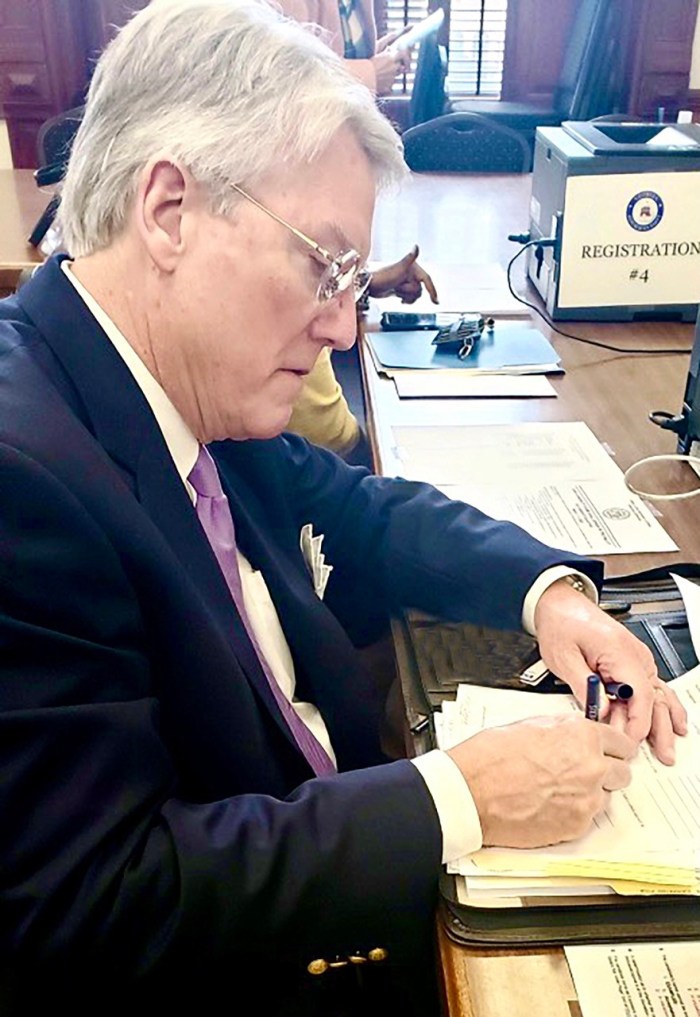
Mike Hodges qualifies for Georgia State Senate
Republican Mike Hodges of Glynn County qualified Wednesday to represent District 3 in the Georgia State Senate.
“It is important to have a leader in the State Senate with real-world business experience and strong conservative values,” said Hodges. “I believe in lower taxes, cutting red tape for small businesses and workforce development that creates new jobs and generates economic development. I will protect our constitutional rights and stand up for election integrity.
“I will be a strong supporter of healthcare including mental health programs that are affordable and available. I will also work to ensure there is adequate funding for public safety, infrastructure improvements and broadband access for rural areas in our district,” he continued. “I believe we should give our parents a voice in their child’s education and provide every student with the resources to be successful in today’s workplace.”
Hodges has lived in the district his entire life and has been active in the business community for over 45 years. He currently serves as president of the southeast Georgia coastal market for Ameris Bank which includes Glynn, Camden, Liberty and Ware Counties.
Hodges has held leadership positions in numerous organizations including the Glynn-Brunswick Memorial Hospital Authority, Southeast Georgia Health Systems, Coastal Community Health Board, College of Coastal Georgia Foundation, Jekyll Island Authority and the Brunswick-Golden Isles Chamber of Commerce.
He has also been active in the Brunswick Kiwanis Club, Coastal Georgia Historical Society and Communities of Coastal Georgia Foundation plus the United Way and American Cancer Society. Married for 38 years, Hodges and his wife Dana have two grown sons and are looking forward to the arrival of their first grandchild this summer. Georgia Senate District 3 includes the counties of Brantley, Camden, Charlton, Glynn, McIntosh and portions of Ware.
Media Contact:
Mike Hodges
253 St. Andrews
St. Simons Island, GA 31522
Tel: 912.266-5900
Email: mike.hodges@amerisbank.com

The Glynn County Republican Party does not endorse any candidate in a primary of which there are two or more announced Republican candidates. This information is being shared for informational purposes only and does not constitute an endorsement of this candidate by the Glynn County Republican Party.
FOR IMMEDIATE RELEASE
February 1, 2022
CONSERVATIVE EDUCATOR NORA LOTT HAYNES ANNOUNCES CAMPAIGN FOR STATE SENATE DISTRICT 3
Conservative educator and mental health reform advocate, Nora Lott Haynes, announced today that she will run for the Senate District 3 seat currently held by Sheila McNeill. Senator McNeill announced last week that she will not seek re-election. District 3 includes Brantley, Camden, Charlton, Glynn, McIntosh and part of Ware Counties.
“I am excited to announce my campaign for State Senate,” said Haynes. “I truly love Southeast Georgia, its people, and our shared conservative values. I am running because Senate District 3 deserves the very best – a strong conservative leader that will fight like hell to protect our values and preserve our way of life.
“I am no stranger to politics and I have fought relentlessly for those who need a voice. As an educator, I taught students with physical and mental disabilities and worked with the Georgia Department of Education to improve special education programs throughout our state. As the mother of an adult child who suffers from severe mental illness, I have devoted my life fighting for reform of Georgia’s broken mental health system. I have spent countless hours helping other families like mine find the resources and help they need to provide for their loved ones.
“Now more than ever, we need a proven fighter at the State Capitol to deliver for the people of Senate District 3. I am ready to take my passion for Southeast Georgia to the Legislature in order to implement reforms to our mental health system and to stop the radical left dead in their tracks. We are in the fight of our lives against those who want to force their radical ideologies on our children, silence conservatives, defund the police, take our guns, and make it easier to cheat in our elections. I will NOT let it stand. I’ll fight tooth and nail to protect our values, grow opportunity here at home, preserve our quality of life, and secure a strong future. I look forward to working hard to earn the trust and support of the people of this district. With your vote, I will serve as an unapologetic conservative fighter you can trust.”
About Nora Lott Haynes
Nora Lott Haynes is a proud product of Senate District 3. Born and raised in Ware County, Nora’s family has deep roots across the district that spans generations.
An educator, Nora began her career in Ware County Schools where she worked as a Special Education teacher, an administrator, and a researcher where she oversaw several research projects. She later went on to the Georgia Department of Education where she worked as the Reading First Special Education Specialist.
As the mother to an adult child with serious mental illness, Nora has been a tireless advocate, researcher, and leader for mental health reform in Georgia. Along with former GBI director Vernon Keenan, she helped found the Georgia Crisis Intervention Team (CIT) program. She served as President of the National Alliance on Mental Illness Georgia, served as chair of public policy – and was the Director of the Opening Doors to Recovery, a mental health research project which is now evidence based. She was appointed by Governor Brian Kemp in 2019 to serve on the Georgia Behavioral Health Reform and Innovation Commission. An accomplished researcher, Nora has been published in numerous publications.
Nora received a Bachelor of Science Degree in Orthopedically Handicapped from the University of Georgia, a Masters degree in Behavioral Disorders, and an Education Specialist Degree in Leadership from Valdosta State University.
Nora is the mother of two children, Joey and Camie, a son-in-law Charles Russo, and has one grandson, Costa. She and her husband, Greg reside on Saint Simons Island.

Hundreds, sometimes thousands, of volunteers set out to canvass in the months leading up to an election. They trickle down into the counties, the cities and the towns, to the doorsteps of voters, with a singular objective of having meaningful conversations.
Sometimes, they are successful. In those cases, constituents are persuaded to pick a side, register, and on the day, vote.
In others, canvassing seems to have had no effect at all on the outcome of an election.
What is the key factor that leads to those differing scenarios?
One could cite, among other reasons:
In the end, it all boils down to preparedness.
Here is how you can prepare for a successful political canvassing effort.
What is political canvassing?
Political canvassing involves having volunteers knocking on doors (or making calls and sending texts) on behalf of a political campaign to engage voters in an election.
Canvassing is done to:
– Increase awareness about an issue
– Identify voter preferences
– Persuade undecided voters to support a campaign
– Get out the vote
There are plenty of factors that can affect how well your canvassing efforts work towards getting people to vote for you. Among them – How you target voters, your canvassing timeline, and what channels you use to reach voters.
To expand on the last point, the three main channels that political campaigns use for canvassing are door knocking, phone calls, and peer to peer text messages.
| Door to door canvassing | Phone calls | Text messages |
| A study on MoveOn GOTV operations found that turnout increased by approximately 9 percentage points through door to door canvassing. | Volunteer-led phone banks have been found to increase turnout by 3.8 percentage points. | Voters getting text reminders voted at a rate 3.1 percentage points higher than those who did not. |
Beginning a political canvassing campaign involves assembling a team of individuals that can get the work done, starting with:
Your field organizer is in charge of communicating with and managing the volunteers who are taking part in your canvassing events.
What are the responsibilities of a field organizer?
What to look for in a field organizer
Since the role involves managing people and tools for canvassing, look for individuals who:
Hiring a field organizer
Hiring for a campaign is much like hiring for a business.
Post an opening on job portals like:
Besides the candidate themselves, your volunteers are the face of your campaign, in that they interact directly with voters.
What are the responsibilities of a canvassing volunteer?
Recruiting volunteers
Here’s an example of how you can incorporate a call to volunteer in your canvassing script:
We’re looking for voters to help make calls for our campaign! Are you willing to volunteer to help turn out voters?
If YES
Great! Could we have your number/email so we can send a volunteer link?
Canvassing is done in the months leading up to election day. This reaches a high point two months before election day, when the majority of canvassing takes place.
The typical election canvassing campaign goes in the order of:
Depending on the size of the campaign you are running, the resources you have available (in terms of volunteers and voter data), and your proximity to the election, consider allocating more or less time to each stage of voter outreach.
Consider this canvassing timeline for both Primary and General Elections over the period of 1 year before election day:
12 months before election day
Volunteer recruitment and training takes place well before getting into the swing of the election.
11-7 months before election day
Run voter ID campaigns to identify supporters, non-supporters, and undecided voters.
Run voter registration campaigns when applicable for your race. Follow up with unregistered voters.
Start creating a plan for GOTV campaigns using the data collected from voter ID.
6 months before election day
Continued volunteer recruitment and training. Strong supporters identified during voter ID can make for ideal volunteers.
Run persuasion campaigns, concentrating on undecided voters.
Continued outreach in the form of door to door, phone calls and text messages.
2-1 months before voting
Start your GOTV campaigns, preparing constituents to go to the polls.
Send followup texts with information that will help get voters to the polls (polling locations, voting deadlines)
In the case of early voting, your GOTV campaign starts a month or two in advance.
Tip: If you are canvassing over a shorter period of time – say, three months before the election, it would be advisable to jump straight into GOTV, especially if you have a voter list with all the data you need.
Once you have decided on a timeline for your canvassing efforts, it’s time to start planning out how you are going to execute them.
For a typical canvassing event, the process is as follows:
Step 1: The campaign spreads the word about an event to supporters
Step 2: The campaign makes preparations for the event – Setting up calling and texting campaigns, cutting turf, creating walk lists, training materials.
Step 2: They gather in a centralized location, ex. A campaign office. This doesn’t apply for distributed calling and texting campaigns.
Step 4: Volunteers are trained on the objective of the canvass and how to approach voters.
Step 5: Volunteers will receive walk lists, scripts and campaign literature.
Step 6: Canvassing begins – Volunteers reach out to everyone on their walk lists, fill in data based on their conversations and leave behind campaign literature.
Step 7: The newly acquired voter information is brought back and entered into the voter database (or synced, if the campaign is using a canvassing app or a tool to make calls and texts)
Let’s expand on these steps:
Recruit volunteers
Once you have the aim and objective of your campaign figured out, it should be easy to find out how many volunteers you will need to reach your canvassing goal.
A typical canvasser spends around 1 to 3 minutes at a door averaging about 20 doors per hour (when we account for time spent walking). So, a single volunteer on a 3-hour shift can knock around 60 doors per shift.
For phone calls, the call rate depends on what dialer you are using.
For peer-to-peer texts, a volunteer can be expected to send out around 1500 texts an hour.
Depending on your mode of canvassing, you can estimate how many volunteers you will need to reach all the voters on your list.
Confirm the attendance of volunteers multiple times before the canvassing event
Set a time and place
When you spread the word about a canvassing event, make sure you communicate these important details:
Turf cutting (in the case of door to door canvassing)
Distribute a share of your voter universe to each canvasser by assigning them to a geography or a neighbourhood.
Preparing these walk lists will take up a major share of your canvassing preparation time. Using a CRM tool, this process becomes a bit easier.
Prepare volunteer materials
In the case of door to door canvassing this is a walk packet, with the:
The alternative to paper and clipboards are canvassing apps like eCanvasser and MiniVAN.
Ask your volunteers to download a canvassing app on their phones. You can sync data, including scripts and walk lists to the app, so all they need is their phone when they are out canvassing.
Prepare for call and text canvassing
For calling and texting campaigns, this involves:
Tip: Use canvassing apps for phone calls and texts
Sign volunteers in
Get a headcount of how many people actually turned up to the canvassing event. You may have to make some adjustments based on the resources you have.
Make calls or send texts to volunteers who RSVPd and are yet to turn up. For the volunteers that do turn up, but you don’t have their contact information, collect their phone number so you can contact them in case you need to relay instructions during the event.
Train volunteers
Any good political canvassing campaign starts by getting your volunteers up to speed with a quick, structured training session.
Start off a session by having the campaign owner (candidate or campaign manager) give a short introductory speech. The speech can reiterate the importance of canvassing and the goals of the campaign. The aim of this video or in-person introduction should be to get people fired up about volunteering.
Once your volunteers get comfy, get into the main agenda of your training session. Fill them in on:
Once done, split volunteers into pairs, with one person playing the role of a canvasser, and the other being a constituent, so that they can familiarize themselves with having a conversation before putting it to practice on the field. Make sure every volunteer tries each role at least once.
Follow up
The follow-up matters almost as much as the initial contact with a potential voter.
Campaigns will use a plethora of tools across the duration of the campaign from canvassing to phone calls, email, text messages, social media, website, fundraising tools, campaign management software.
This helps create a seamless flow of engagement with voters from the start of a campaign to election day.
For example, door-knocking efforts should aim at reinforcing previous media messages and using data available from previous phone banking campaigns.
Phone banking campaigns at the voter identification stage would have identified supporter levels and issues affecting individual voters. Your door to door canvassers should be using this data to target their voter contact making sure they reach the right voters with the right message.
Following up on a door knock, a follow-up email or text with details about the campaign and a call to action to donate is also a good way to cement the bond with your constituents.
Here’s how you can master messaging for each stage of the campaign.
Here are some general best practices for campaign and volunteers when it comes to door to door, phone and text canvassing
Make sure you’re talking to the right person
This best practice applies in the case of phone calls or peer to peer texts.
Phone numbers aren’t always right, and when you are calling a landline, the chance of reaching a specific voter in the household is not very high.
Start your script by asking if you are speaking to the right person. If you are not, ask your volunteers to note that down or if your phone banking service lets you switch to the appropriate household member.
If you are using a Predictive Dialer to make calls remember that there is typically a 1-2 second delay connecting a voter to the caller. When you’re first connected, you can safely assume that the voter has already said, ‘hello,’, so feel free to jump right into confirming the voter: “Hi, may I speak with {voter_name}?”
Positive attitudes are contagious
As discussed, your volunteers are the face of your campaign, right after your candidate. That means it’s worth taking the time to make a good impression.
Ask volunteers to thank voters for their time, whether a contact went well or not. Showing gratitude will keep supporters engaged and make them feel more involved.
In addition, a smile can help make a good first impression.
Knocking on dozens of doors or making tons of calls in an hour can be exhausting. Volunteers tend to wax and wane in their enthusiasm levels. This will show in their speech. You can help by including markers in your scripts that ask volunteers to smile and sound excited.
Related reading: Here’s an article by Harvard Business Review on authentic speaking.
Tip: A positive attitude and body language are important for calls too!
The article linked above talks about the clear connection between a speaker’s body language, inflection, and energy. You can use that to your advantage. In most cases, you can create the tone you want to convey over a call by altering your physical location.
Ask volunteers to try walking around and actively using physical gestures while on calls. They can also convey a casual tone of voice, by smiling as they speak.
Convince through social pressure
Messaging that attempts to convince voters to take action through social pressure has been found to be effective.
This can be done by:
The Progressive Turnout project sent over 87,000 social pressure mailers to voters in 2018, and cited an 8% increase in voter turnout.
It is important to note that social pressure that treads into the realm of shaming voters can result in backlash, especially in the long term.
Voter ID efforts at the start of your campaign help you narrow down your voter universe for persuasion and GOTV efforts down the line.
As we saw in the canvassing timeline, it’s important to start voter ID as soon as you have access to your voter list and a sizable number of volunteers.
Voter ID revolves around:
Data collection
You want to know:
The best way to do this is by having volunteers ask direct questions, noting the data down on their walk sheet, app, or calling/texting software.
Your voter ID survey should look something like this:
Question 1: Do you support {candidate name}?
Response 1.1: Strong Support
Response 1.2: Leaning support
Response 1.3: Undecided
Response 1.4: Leaning Opposition
Response 1.5: Strong Opposition
Question 2: Can I ask you about issues you care about at the moment?Response 2.1 – 2.8: Health, Environment, Climate Change, Transport, Agriculture, Education, Jobs, Immigration.
If supporter
Question 3: Would you consider volunteering to help elect {candidate name}?
Response 3.1: Phone banking
Response 3.2: Text banking
Response 3.3: Canvassing
Response 3.4: Data entry
Response 3.5: Other
Response 3.6: Not interested
Question 4: Would you consider donating to {candidate name} campaign?
Response 4.1: Yes
Response 4.2: No
Response 4.3: Already did
Response 4.4: Ask me later
Question 5: Can we put up a lawn sign for {candidate}?
Response 5.1: Yes – Lawn sign
Response 5.2: Yes – Poster
Response 5.3: No
If they are leaning or undecided
Question 6:Would you consider voting for {candidate name}
If NO
Question 7: Who will you be supporting?
Collect name of candidate
Question 8: We want to make sure we have the right address. Can you confirm {address}?
If NO collect the new address
Question 9: Can we have your email address to keep in touch?
Notice that the ask to join your campaign as a volunteer is done right at the voter ID stage. This saves you the effort of running an additional campaign just for volunteer recruitment. Similarly, you can help voters get registered to vote once you have their registration status.
Voter persuasion involves contacting undecided voters and convincing them to vote for your candidate.
You can start your voter persuasion campaign as soon as you have ID’d your voter list (but not too far out from the election, since that can serve to annoy voters.)
Deep Canvassing
Deep canvassing is a technique that focuses on changing the mind of voters by having 2-way conversations. That means volunteers need to be as adept at listening as they are at speaking to voters.
In 2018, progressive group Changing The Conversation Together used deep canvassing to change voter’s minds in traditionally conservative Staten Island. They reached out to over 10,000 voters, with 27% of the voters contacted saying they were more likely to vote Democrat. This resulted in the first Democratic victory in that district in 40 years.
In a nutshell, the deep canvassing process involves:
GOTV canvassing involves targeting the likely supporters of your campaign and convincing them to go to the polls in the last stretch of the election.
During the initial stage of GOTV, it is crucial for the script to engage the voters in creating a plan for how and when they vote. Right before the election, your scripts should be tailored towards getting out the vote.
Structure you script in this way:
Here’s an example of a GOTV script:
Hello, may I please speak with <name of the voter>?
My name is <name of volunteer>, and I’m a volunteer/student intern on behalf of <name of your campaign>.
A few weeks ago, you promised to vote for <name of your candidate> on Election Day <mention the date>
Do you still intend to vote on <date of polling> for <name of your candidate>
If yes: Great! An early voting period is <give the time> and your polling place is at <mention the location>. Do you know where that is?{Help them if they are unaware as to where it is}
Thank you for helping us.
If no: Thank you for your time. Have a great day!
Make sure you are aware of the regulations surrounding your chosen canvassing method before starting:
Local governments cannot restrict people from going door-to-door for noncommercial purposes between the hours of 9 a.m. and 9 p.m.
If a homeowner has made it clear that canvassers are prohibited (for example, with a sign on a door), canvassers may be charged with defiant trespassing.
In the case of literature drops, it is a federal offence to put campaign literature in a voter’s mailbox. Hand them literature during or after your discussion with them or at the door.
Different countries have different regulations for political phone calls. For example, in the US:
Make sure your campaign is operating within compliance.
Similar to phone calls, you are not allowed to send automated text messages (mass texts) to voters without their prior consent. Peer to peer text messages on the other hand, are allowed (since volunteers send texts manually.)
If you plan to send automated texts:
Here is a comparison of the three most common methods of political canvassing:
| Door-To-Door Canvassing | Phone Canvassing | Text Canvasing | |
|---|---|---|---|
| Remote Capability | Since it involves in-person contact with voters, you will need canvassers to come to a centralized location, limiting the scalability of door to door canvassing. | If you are using a phone banking software, you can run distributed calling campaigns. That means volunteers can participate no matter where they are located. | Texting works in much the same way as phone banking. Volunteers can participate from anywhere. |
| Persuasive Effect | Voter turnout has been shown to increase approximately 9 percentage points through door to door canvassing. | Volunteer-led phone banks have been found to increase turnout by 3.8 percentage points. | Voters getting text reminders voted at a rate 3.1 percentage points higher than those who did not. |
| Time | Requires more time and volunteers to canvass X voters | Requires less time and volunteers than door to door canvassing | Requires the least amount of resources among the three channels |
| Cost | Consider the cost of: The software you use for canvassing Materials (campaign lit, yard signs) Refreshments for volunteers Transporting volunteers | Consider: The subscription cost of the calling tool you are using The cost per call to each contact | Consider: The subscription cost of the texting platform Cost per text to be sent. |
| Volunteer Requirement | Assuming 20 doors per volunteer per hour, you can calculate the number of volunteers you need based on the number of doors you need to knock. | Depends on the dialer you are using. Predictive Dialer – a single volunteer can make 45 dials per hour Power Dialer – 110 dials per hour | With volunteers sending 1000+ texts an hour with P2P texting, calculate this with the total number of contacts you are reaching out to. |
| Available Tools | eCanvasser, MiniVAN, Polis, Organizer | CallHub | CallHub, Hustle |
We talked about the impact of door to door canvassing earlier. Many campaigns (especially local ones) still use pen and paper to cut turfs, and collect data from voters. Using a canvassing tool can save a campaign both time and money.
Ecanvasser
The Ecanvasser app makes it easier to manage field activities through intelligent maps to find voters and real-time tracking of canvassers. Ecanvasser’s integration with Nationbuilder lets you plug in data from the CRM for canvassing campaigns.
Polis
Polis App is a canvassing software for campaigning and door-to-door sales. The app can automatically create walking routes for door-to-door canvassers based on their location.
Organizer
Organizer is a field outreach platform for Democratic and Progressive candidates making it easier for a campaign to manage face-to-face contacts with voters.
MiniVAN
MiniVAN is the canvassing tool by NGPVAN that makes maps, walk lists, and scripts instantly available to canvassers on their iPhone or Android app.
CallHub
A phone banking tool like CallHub lets you:
CallHub offers three dialers to choose from. Depending on the number of people you are calling and the objective of your campaign, you can use the:
CallHub
The CallHub software allows you to use both mass texting and peer to peer texting to reach out to supporters.
Through peer to peer texting, volunteers can record survey responses from their contacts.
The implementation of channels like in-person canvassing, phone calls, and texts work better when they are used in tandem. A single door visit might get voter thinking, but only continuous engagement through multiple channels can translate into a vote.